Actueel lesmateriaal voor lesmethodes Engels van Malmberg

Welkom op de blogspot Engels van uitgeverij Malmberg voor gebruikers van All right!, Realtime en Of Course! U vindt hier actuele video's voorzien van opdrachten, voor verschillende vaardigheden en op verschillende ERK-niveaus. Leuk én leerzaam om de les mee te beginnen of af te sluiten!
Daarnaast maakt Malmberg verschillende keren per jaar een actuele leesopdracht voor Engels, afwisselend op niveau A2, B1 en B2. U vindt ze hier.
Posts tonen met het label discussie. Alle posts tonen

vrijdag 7 juni 2019

Cruising Away?

Last week, Venice saw an incident with a cruise ship.

Read the following words and phrases and their definitions.
  • a Hollywood production - a typical Hollywood film
  • residents - people who live in a particular place
  • storey - a floor level of a building
  • quayside - the edge of a quay (kade), near the water
  • oblivious to the potential danger - not aware of the possible danger
  • dockside - the area along a shore next to a dock (dok)
  • tugboat- a small, powerful boat that is used for pulling and pushing ships into harbors or up rivers
  • turning point - the time when a situation starts changing in an important way
First read the assignment. Next watch the video. Take notes to help you do the assignment.


  1. What exactly happened with the cruise ship?
    Tell in your own words. Or write a short report about the incident.

  2. How many passengers were there aboard the cruise ship?

  3. Did all the people on land immediately realize what was happening?

  4. Were any buildings in Venice damaged during the incident?

  5. Name two or more reasons why people in Venice are protesting against cruise ships.

Extra speaking assignment
Is a ban on cruise ships in cities like Venice a good idea?
1. Split the class in two.
2. One side thinks of arguments for a ban, the other against a ban.
3. Have a class discussion.

vrijdag 1 februari 2019

House on Fire

Last week, world leaders and business chiefs met in Davos to talk about global issues and solutions. 16-year-old Greta Thunberg from Sweden was there too. She presented her point of view on climate action.

Read the following words and phrases and their definitions.
  • lack of effective change - not enough action to make real changes
  • price tag - the amount of money that something costs
  • to acknowledge - to admit; to say that you accept or do not deny the truth or existence of something
  • broad public awareness - the situation that many people know that something exists or is happening
  • homo sapiens - the human race; all human beings
  • to gain notoriety - to become well-known for things you do or say
  • mature - having the mental and emotional qualities of an adult and acting like that
  • to uphold an agreement - to give support to an agreement and stick to it
  • to adhere to environmental regulations - to act in the way that is required by the rules for making and keeping the world healthy
  • unspoken sufferings - physical or mental pain which is understood without being directly said aloud
First read the assignment. Next watch the video. Take notes to help you do the assignment.


  1. What does Greta mean when she suggests that ‘the house is on fire’?

  2. What does Greta want of the world leaders?

  3. Greta says: ‘Their financial success has come with an unthinkable price tag.’ What is this ‘price tag’ she is talking about?

  4. According to Greta, is it too late to do anything? Explain your answer.

  5. Does Greta think it will be an easy task to solve the climate crisis? Explain your answer.

- Watch Greta’s full speech here.
- Also listen to Greta’s message to Davos before leaving by train from Stockholm to Switzerland.
- Children all over the world are concerned about climate change. Check out this earlier video with students in Australia.

Extra speaking assignment
Greta Thunberg started the climate strike movement, young people skipping school to draw attention to the issue of climate change.
1. How do you feel about going on a school strike because of climate change?
2. Split the class in two.
3. One side thinks of arguments for striking, the other against striking.
4. Have a class discussion.

donderdag 9 maart 2017

The Bigger Picture

This month, a picture taken in New York went viral on Twitter. Nada Tawfik asked New Yorkers about it.

Read the following words and phrases and their definitions.
  • be fazed by something - let something make you feel afraid or uncertain
  • people from all walks of life - all sorts of people with different backgrounds, jobs, positions in society, etc.
  • accustomed to - familiar with, used to
  • equality - the state of being equal, especially with regards to status, rights, and opportunities
  • where they want the country to head - the direction they want the country to take, how they want the country to develop
  • have empathy - understand and share the experiences and emotions of other people
  • weird - unusual, strange
First read the assignment. Next watch the video. Take notes to help you do the assignment.


  1. What is the main question Nada Tawfik asks?

  2. What is the general response of the people in the street?

  3. With whom should we have empathy?

  4. Pick one response you feel most strongly about.
    Explain why you really agree or disagree with this point of view.

Extra speaking assignments
I
1. Watch the video once more.
2. Focus on the questions Nada Tawfik ask. Write them down.
3. Work in groups of 3 or more.
4. One student asks the other students the same questions as Nada Tawfik in the video.
5. The other students respond.
6. Take turns being the interviewer.

II
1. Split the class in two groups.
2. One group represents people who are okay with the picture.
3. The other group represents people who think the situation in the picture is wrong or weird.
4. Let the discussion begin! Take turns stating your opinion and responding to the other side.
Tip: Use phrases like the following:
- In my opinion ...
- I strongly/firmly believe that ...
- I’m convinced that ...
- I personally think/believe ...
- I honestly/personally feel that ...
- etc.

vrijdag 27 januari 2017

1984

Breaking bookish news this week was that Amazon has sold out on 1984. A good reason as ever to read (or re-read) George Orwell’s famous novel. The main character is Winston Smith. For starters, the video by Shaun from Australia will give you a good idea what the story is all about.

Read the following words and phrases and their definitions.
  • mundane - dull and ordinary
  • impure thoughts - intimate thoughts that are considered wrong; not allowed by, in this case, Big Brother
  • crippling - very unplesasant, making it impossible to move freely
  • evaporate - go away suddenly, disappear, vanish
  • eventually - at some later time
  • rodent - a small animal (such as a mouse, rat, squirrel, or beaver) that has sharp front teeth
  • bleak - not hopeful or encouraging
First read the assignment. Next watch the video. Take notes to help you do the assignment.


  1. What is Winston’s job?

  2. Who or what is Big Brother?

  3. What effect does Julia’s note have on Winston?

  4. What is special about Room 101?

  5. What does Shaun take away from this book?

Extra discussion questions

Work in groups of 4 or 5 or have a class discussion.
Pick a question and start discussing.
  1. Think about Winston’s job. Do you think it’s okay what he does? Explain your point of view.
  2. Find out why 1984 suddenly is so popular. Now that you know more about the story: Do you see it as a topical (actueel) novel as well? Explain your point of view.

Extra reading assignment
Read 1984 yourself and form your own opinion.

donderdag 26 januari 2017

Fired Up

On January 20, 2017, Donald Trump was inaugurated as America's 45th President.
The day after, the Women's March on Washington took place. Why did they take to the streets?

Read the following words and phrases and their definitions.
  • call for something - say loud and clear that something is necessary or should be done
  • global - involving the entire world
  • rally - a public meeting to support or disapprove someone or something
  • affordable - not too expensive; with a price people can pay
  • under threat - in a situation that something bad or harmful could happen
  • bigotry - intolerance for people who have different opinions, beliefs, etc. than oneself
  • fired up - filled with enthusiasm and excitement
First read the assignment. Next watch the video. Take notes to help you do the assignment.


  1. How did it all begin?

  2. Explain what the video’s title means: Women's March Goes Global.

  3. What was the main message of the march?

Extra writing and speaking assignment

1. Watch the video again.
2. Write down three things people say they are marching for.
3. Compare your list with those of your classmates.
4. Discuss how you feel about these things. Would you fight for them?

donderdag 13 oktober 2016

Bob Dylan

US singer Bob Dylan has been awarded the 2016 Nobel Prize for Literature. No songwriter has won the prestigious award before.
A famous song by Bob Dylan is “Blowin’ in the Wind”. In this song about peace, war and freedom, Dylan questions why people don’t realize how pointless war is. The words of the song are not really difficult. But together they form sentences with complex meanings. The song was released in 1963.

Read the following words and phrases and their definitions.
  • pointless - having no meaning, purpose, or effect
  • chorus - a part of a song that is repeated between verses; also called refrain
  • metaphor - a word or phrase for one thing that is used to refer to another thing in order to suggest that they are similar
  • cannon - a heavy metal or stone ball that is shot from a cannon
  • ban - to forbid people from using something
  • pretend - to act as if something is true when it is not true
First read the assignment. Next listen to Dylan singing “Blowin’ in the Wind” in the video. Take notes to help you do the assignment.


  1. How many questions does Dylan ask?

  2. What is the effect of all these similar questions one after the other?

  3. “How many seas must a white dove sail, before she sleeps in the sand?”
    What does the dove in this metaphor symbolize?

  4. The chorus tells us where to find the answer to all the questions:
    “The answer is blowing in the wind.”
    Discuss what this could mean.

  5. Think of 2 or more questions that could fit in the song.
    Write them in the same way:
    “How many ....... must ........................ before ..................................?”

Extra speaking assignment
1 Listen here to Tom Conti, Miranda Hart, Samuel West and Nigel Havers reading Dylan’s lyrics.
2 They read lines from different songs. Find out from which songs.

Extra discussion assignment
1 Some people think lyrics cannot be seen as poetry. Do you agree with that?
2 Explain your point of view in writing or in a class discussion.

donderdag 11 februari 2016

Microcephaly

The Zika virus is dominating the news right now. In Brazil, the possibility of a link to microcephaly has been raised. Microcephaly causes a baby to be born with a small head and can lead to the brain not developing properly. It is a rare condition, but one that has been around for longer. In the video, you can learn what it is like to live with microcephaly.

Read the following words and phrases and their definitions.
  • condition: a sickness or disease that a person has for a long time
  • paediatrician: a doctor who treats babies and children
  • unconditional love: complete and absolute love that is not limited in any way
  • gene: a part of a cell that controls or influences the appearance, growth, etc., of a living thing
  • faulty gene: an imperfect gene; a gene that has mistakes
  • contagious: having a sickness that easily can be passed to someone else, for example by touching
  • nasty: very unpleasant and unkind
  • put down: to kill (an animal) in a way that causes it little pain usually because it is injured or sick
First read the assignment. Next watch the video. Take notes to help you do the assignment.


  1. What expectations did doctors have for Shiven when he was just born?
    Name at least 2 examples.

  2. Shiven is at the more severe end of the microcephaly spectrum.
    Explain the underlined phrase.

  3. What is the most positive thing about 19-year-old Shiven according to his mum?

  4. Microcephaly has a number of causes.
    Name the two causes mentioned in the video.

  5. What is the difference between Shiven’s and Robin’s condition?

  6. How does Robin describe his condition?

  7. What do children born with microcephaly need most according to Shiven’s mum?

Extra speaking assignment
“Shiven is proof that with the right support people with the condition can have a good quality of life.”
  1. Work in smaller groups or as a class.
  2. Watch the video once more, this time with the above statement in mind.
  3. Discuss the statement with your classmates.
  4. State whether you agree or disagree with the statement. Explain your opinion.

donderdag 4 februari 2016

Oscar Nominated Animated Short Films 2016

It's that time of year again: The Oscars are coming up.
Jackson Murphy takes a look at this year’s Oscar nominated animated short films.

To help you with the video, here are the titles of the five featured shorts:
  • Bear Story
  • Prologue
  • Sanjay's Super Team
  • We Can't Live Without Cosmos
  • World of Tomorrow
First read the assignment. Next watch the video. Make notes to help you do the assignment.


  1. What is Jackson’s overall opinion about this year’s nominated shorts?

  2. Copy the titles of the shorts on five different pieces of paper. For each video write down:
    a) some general notes regarding their main story,
    b) what Jackson has to say about it, whether he liked it or not and why.

  3. Form groups of 3 or 4 students or work as a class. Tell each other which one of the five nominated videos you would like to watch. Explain your choice.

donderdag 17 december 2015

Christmas Break

How are you going to spend your Christmas break? Sleep in for forever? Check out this post from last year for some other ideas.

donderdag 4 juni 2015

Everybody Famous

Artist Richard Prince has caused controversy with the works of art he’s been selling for huge amounts.

First read the assignment. Next watch the video. Take notes to help you do the assignment.


Answer the questions in English, either in writing or in a group discussion.
  1. What did Richard Prince do to cause controversy?

  2. What do the words "appropriation" and "repurposing" mean?

  3. In what sense could Prince’s work be called "transformative"?

  4. Copyright law hasn’t really changed. What has changed though?

  5. What would you do if Richard Prince "transformed" your photo?

  6. Now that you know what can happen with your Instagram pictures, will you change the way you use social media?

donderdag 28 mei 2015

Welke roklengte?

De afgelopen week trokken verschillende meisjes de aandacht om de lengte van hun rok. In het filmpje vertelt Mai Noman daar meer over.

De volgende uitdrukkingen en woorden kunnen je helpen het filmpje beter te begrijpen:

stick by your decision - to continue to support what you decided earlier; to not change your mind about something you had already decided
conspicuous - very easy to see or notice
an issue - something that people are talking about, thinking about, etc.; an important subject or topic

Lees eerst de opdrachten. Bekijk dan het filmpje.


  1. Neem een leeg vel papier. Maak twee kolommen. In de ene kolom noteer je de belangrijkste informatie over de korte rok, in de andere die over de lange rok.
    Denk daarbij aan zaken als: in welk land speelde dit, hoe oud is de rokkendraagster in kwestie, hoe heet ze, hoe reageerde ze, etc. Schrijf de informatie in het Engels.

  2. Luister nog eens naar de vragen die Mai Noman aan het eind van het filmpje stelt. Schrijf deze vragen op.
    Bespreek je antwoorden op deze vragen in een groepje van 4 of 5 leerlingen of in een groepsdiscussie met de hele klas.

Tip: Begin je bijdragen in de groepsdiscussie met een van de volgende uitdrukkingen:
- In my experience...
- As far as I'm concerned...
- In my opinion...
- Personally, I think...
- I'd say that...
- I believe that...
- What I mean is

Extra 'fun fact'-vraag
De titel van het filmpje is 'A Tale of Two Skirts'. Dat is een verwijzing naar een beroemd boek. Weet je welk boek dat is?

donderdag 21 mei 2015

Mrs Dalloway

On her YouTube channel, Lesley posts her book reviews. In the video, she talks about her view on Mrs Dalloway.
14 May 2015 marked the anniversary of the 1925 publication of Virginia Woolf’s Mrs Dalloway. The stream-of-consciousness novel has long been considered a modernist classic. Mrs Dalloway, Woolf’s fourth novel, is one of her greatest achievements.

First read the assignment. Next watch the video. Take notes to help you do the assignment.


Answer the questions either in writing or in a group discussion.
  1. How does Lesley explain the “certain love-hate type thing” many readers have with Mrs Dalloway?

  2. What is the main story line of Mrs Dalloway?

  3. How does Lesley describe Clarissa Dalloway’s character? Note the many adjectives she uses. Look up the ones you don’t know.

  4. What do you learn about the most interesting character in the book for Lesley?

  5. How did the book live up to Lesley’s expectations? 

Extra background/reading assignments
  1. Find out more about stream-of-consciousness: what it means; when the term was coined; major works in which it is used; any other interesting aspects.

  2. Mrs Dalloway continues to inspire new generations of writers and readers. Woolf's working title for the book was The Hours. A present-day American novelist has written a modern adaptation of Mrs Dalloway which was published under that working title. His novel was also turned into a movie. Find out:
    a) who wrote the The Hours and
    b) who starred as Virginia Woolf in the film adaptation of The Hours.

  3. Still more time left? Read Mrs Dalloway by Virginia Woolf; read the novel The Hours; check out the movie The Hours.

Extra speaking assignment
  1. Watch the video once more.
  2. Take note of the way Lesley sets up her filmed report.
  3. Pick a book you know well.
  4. Write out the main points for your spoken report. Organize them for a coherent report. Use Lesley’s video as an example.
  5. Film your own book report. (4 minutes max)

donderdag 23 april 2015

Kauwgom

Op 7 mei aanstaande worden in het Verenigd Koninkrijk algemene verkiezingen gehouden. In de aanloop naar de verkiezingen laat de Britse krant The Independent 100 mensen aan het woord die vertellen wat zij zouden doen ‘if I were Prime Minister...’ Jamie Olivers antwoord luidde: ‘If I were Prime Minister: I'd promote fruit’n’veg, ban chewing gum, and bring back Crackerjack.’

Kauwgom verbieden! Daar gaat het filmpje over.

Lees eerst de opdrachten. Bekijk dan het filmpje.


  1. Waarom eten de eerste twee meisjes in het filmpje kauwgom?

  2. Kauwgom belandt soms op ongewenste plekken. Welke worden in het filmpje allemaal genoemd?

  3. Wat is er aan de hand met kauwgom in Singapore?

  4. Luister goed naar het meisje en de jongen die vanaf minuut 1:32 aan het woord zijn. Wat vinden zij van een kauwgomverbod? Zeg ook welke argument ze voor hun standpunt noemen.

  5. Welke antwoorden hoor je allemaal op de vraag: ‘So how do you make sure your gum doesn’t end up somewhere gross?’

  6. Wat als iemand zijn kauwgom op de grond gooit? Hoe moet je die mensen aanpakken volgens de kinderen in het filmpje?

Extra spreekoefening

Werk in een groepje van drie of vier leerlingen of met de hele klas. Praat over de kauwgomkwestie. Bespreek de volgende onderwerpen:
  • How do you make sure your gum doesn’t end up somewhere gross?
  • How should people who chuck their gum on the ground be punished?
  • Should chewing gum be banned definitely?

maandag 20 april 2015

The 2015 Pulitzer Prize for Fiction


The Pulitzer Prize for Fiction is one of the seven American Pulitzer Prizes that are annually awarded for Letters, Drama, and Music. It recognizes distinguished fiction by an American author, preferably dealing with American life, published during the preceding calendar year.

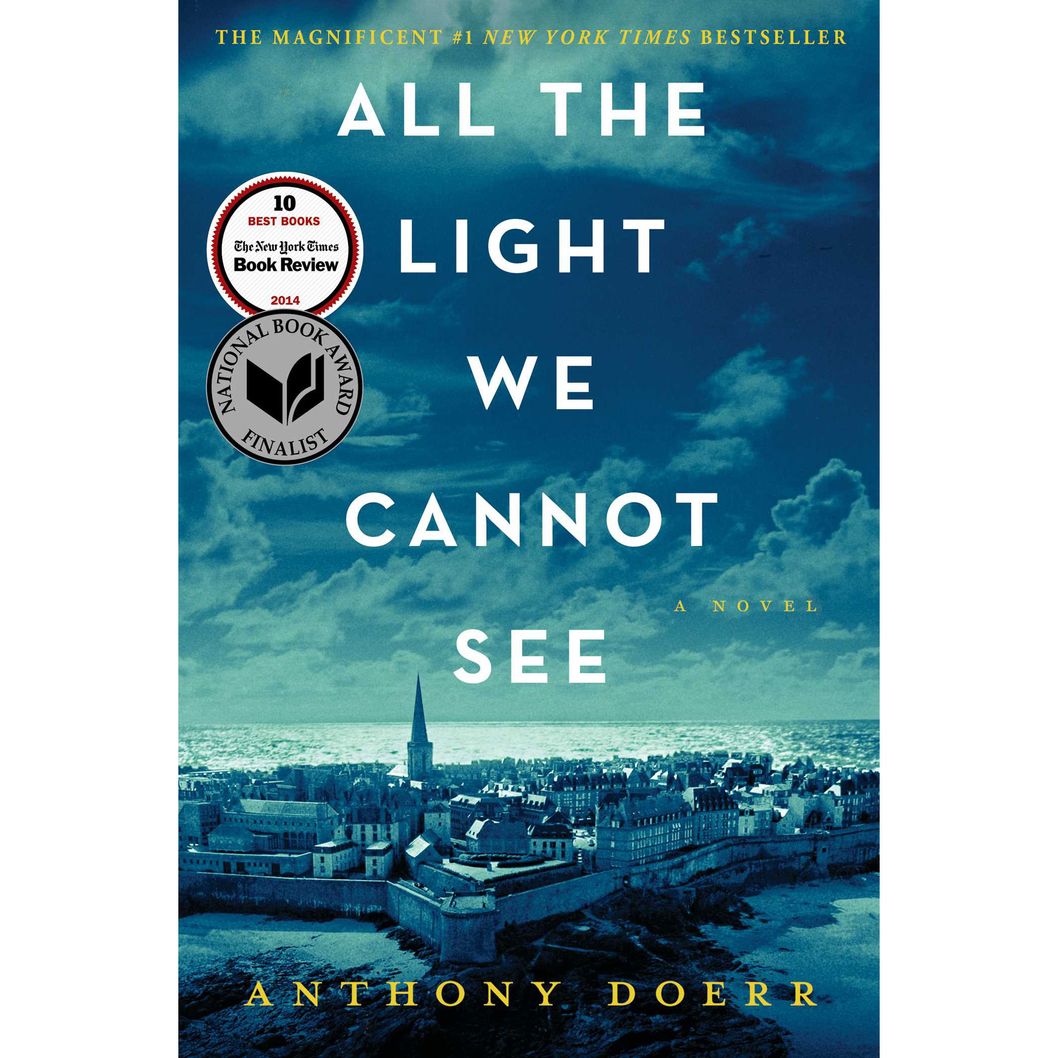
Anthony Doerr's "All the Light We Cannot See", a novel centered on the World War II bombing of St.-Malo, France, and two characters on opposite sides of the war, won the 2015 Pulitzer Prize for fiction on Monday, 20 April.

A video plus assignments related to the novel can be found here.

donderdag 9 april 2015

Why the Sun Really Shines

Spring has finally arrived and with it: the Sun! Why does the sun actually shine? In the 1950s, the educational song Why Does the Sun Shine? was written, based on information that was then believed to be accurate. In 1983, They Might Be Giants, an original band from Brooklyn, New York, covered this song.

Many years later, in 2008, they discovered that the information in the original song was incorrect. The band then wrote an “answer song” in which they updated the outdated information about the Sun. It is called The Sun Is A Miasma Of Incandescent Plasma. The lyrics in the new song reflect our current state of knowledge regarding the Sun.

First read the definitions of the following underlined words.
  • The sun is a miasma = a heavy cloud of something unpleasant or unhealthy
  • incandescent = white or glowing because of great heat
  • The sun is a quagmire = an area of soft, wet ground

First read the assignment. Next watch the video. Take notes to help you do the assignment.


Answer the questions in writing or in a group discussion.
  1. Listen carefully to all the things the Sun is not. Write them down. Compare your notes to those of your classmates. 

  2. Which four states of matter are repeatedly mentioned in the song?

  3. What state of matter exists on the surface of the Sun?

  4. Complete the following lines:
    The sun is a quagmire,
    it’s .......... ........... ........... ..........

  5. “That thesis has been rendered invalid.” What does the last line mean? Explain in your own words.

Discuss the following question in smaller groups or as a class:
What does the experience of They Might Be Giants teach us about how we respond to changing facts?

Extra writing exercise
Can't get enough of the song? Listen again and write out the lyrics.

donderdag 5 maart 2015

What would a nuclear deal with Iran actually look like?

The potential nuclear deal with Iran is in the news. Talks are being held in Montreux, Switzerland. CNN's Jim Sciutto explains the ongoing nuclear negotiations with Iran.

To help you understand the video better, read and discuss the following words and expressions:
  • goal - something that you are trying to do or achieve
  • relief - the removal or reducing of something that is painful or unpleasant
  • sanction - an action that is taken to force a country to obey international laws by limiting or stopping trade with that country, by not allowing economic aid for that country, etc.
  • civilian - relating to people who do not belong to the armed services or police
  • ability to cheat - the means to break promises or a rule or law
  • maintain leverage - to continue to have influence or power that can be used to achieve a desired result
  • framework agreement - a set of basic ideas that may lead to a final arrangement, by which people agree about what is to be done
  • finalise the details - to put all the pieces of information in a final form
  • gap - a difference between two people, groups, or things
  • bridging the gap - to make a difference between two groups smaller or less significant

First read the assignment. Next watch the video. Take notes to help you do the assignment.


Answer the questions in writing or in a group discussion.
  1. Which two parties are involved in the talks?
    And what are their respective goals?

  2. What is the so-called breakout time?

  3. How could the deal be achieved?
    Name the steps Jim Sciutto describes. Give details for each step.

  4. Explain what Jim Sciutto means when he says: “Getting the balance right is difficult.”

  5. Which party wants to lift the sanctions bit by bit. What arguments do they give?

donderdag 29 januari 2015

4 February

Mrs Parks was born 102 years ago, on 4 February, 1913, as Rosa Louise McCauley. In 1932, she married Raymond Parks. She became famous after an incident in Montgomery in 1955.
Several black leaders responded to the incident, among them Martin Luther King.

First read the assignment. Next watch the video. Take notes to help you do the assignment.


Answer the questions in writing or in a group discussion.
  1. What exactly did Rosa Parks do?

  2. What led up to the Rosa Parks incident?

  3. What actions did Montgomery’s black citizens take after the incident?

  4. What does Martin Luther King say in the last part of the clip?

Extra speaking assignment
42,000 black residents of Montgomery, Alabama, (40% of the population) responded to Martin Luthers King’s call for action. It did not have an impact immediately, but they didn’t give up and after about a year things started to change.

Work in smaller groups or as a class. Discuss the following question:
What does the Rosa Parks incident and the actions it sparked tell us about the power in numbers?


Extra writing assignment
Martin Luther King was an influential and eloquent speaker. With his gift for words he managed to reach millions, rich or poor, educated or not.
Listen to his speech in the first part of the clip. Write down his exact words.

donderdag 15 januari 2015

All the Light We Cannot See

Virtually all American year-end lists for novels featured Anthony Doerr’s All the Light We Cannot See. In the video, the author discusses the inspiration for his novel.
First read the assignment. Next watch the video. Take notes to help you do the assignment.


Answer the following questions in English, either in writing or in a group discussion.
  1. Which three events inspired Doerr for All the Light We Cannot See? Elaborate on one or more of these events.

  2. What does Doerr tell us about the two main characters in All the Light We Cannot See? Name three or more details about each one of them.

  3. What does Doerr say about the radio and its role in history?

  4. Has the video piqued your interest in this book? Explain your answer.

donderdag 18 december 2014

What to do over your Christmas Break ...

Are you looking forward to winter break, spending time with your family, friends and your favourite technology devices? Indoors?
James Hamblin visits San Francisco to learn more about spending time indoors. Or not.

First read the assignment. Next watch the video. Take notes to help you do the assignment.


Answer the following questions in English, either in writing or in a group discussion.
  1. What is "Nature Deficit Disorder"? Explain in your own words.

  2. What does "bogus" mean? Explain it first. Then use it in a sentence.

  3. Focus on the usage of "resiliency". Who says it? Explain what it means. Next use it in a sentence.

  4. What are the main points of ecotherapy?

Extra speaking assiment
  1. You are going to have a short debate about ecotheraphy in class.

  2. Appoint a debating leader.

  3. With the rest of the students, form two groups. One side will argue that ecotherapy works, the other will argue against it.

  4. First discuss with your group which arguments you can use to make your point. Make notes to help you in the debate.

  5. Next one spokesperson for each side makes an opening statement.

  6. Have the debate. The debating leader has to make sure both sides get equal time to make their point.

donderdag 11 december 2014

Malala

It has been five years since Pakistani schoolgirl Malala Yousafzai wrote an anonymous diary about life under Taliban rule in north-west Pakistan. Since then she has been shot in the head by Taliban militants, and has become the youngest person ever to win the Nobel Peace Prize. She is now 17 years old.
Malala accepted the award in Oslo on 10 December.

First read the assignment. Next watch Malala Yousafzai's Nobel Peace Prize acceptance speech.


Answer the questions in writing (in English) or discuss the answers in class.

  1. "The word Malala means grief-stricken ..." What does grief-stricken mean?

  2. How did Malala's grandfather call her? Why?

  3. Malala says: "This award is not just for me." Who else is it for?

  4. Malala explains that different people view her differently. In which different ways do others describe her?

  5. With which words does Malala describe herself?